

titel news

Australia’s Next Housing Wave: The Next Three Years of Property Development
titel-real-estate-news
3 minutes read
Australia is entering an important period for residential development. Between now and 2029, governments, developers and the construction industry face the challenge of delivering substantially more housing while dealing with affordability, infrastructure, planning and construction capacity.
At the centre of this is the National Housing Accord, with an aspirational target of 1.2 million new well-located homes over the five years to June 2029. While housing activity has improved, official forecasts indicate that reaching the full target within the original timeframe remains challenging.
Where Will the Growth Come From?
Australia's next generation of housing will not come from one development model.
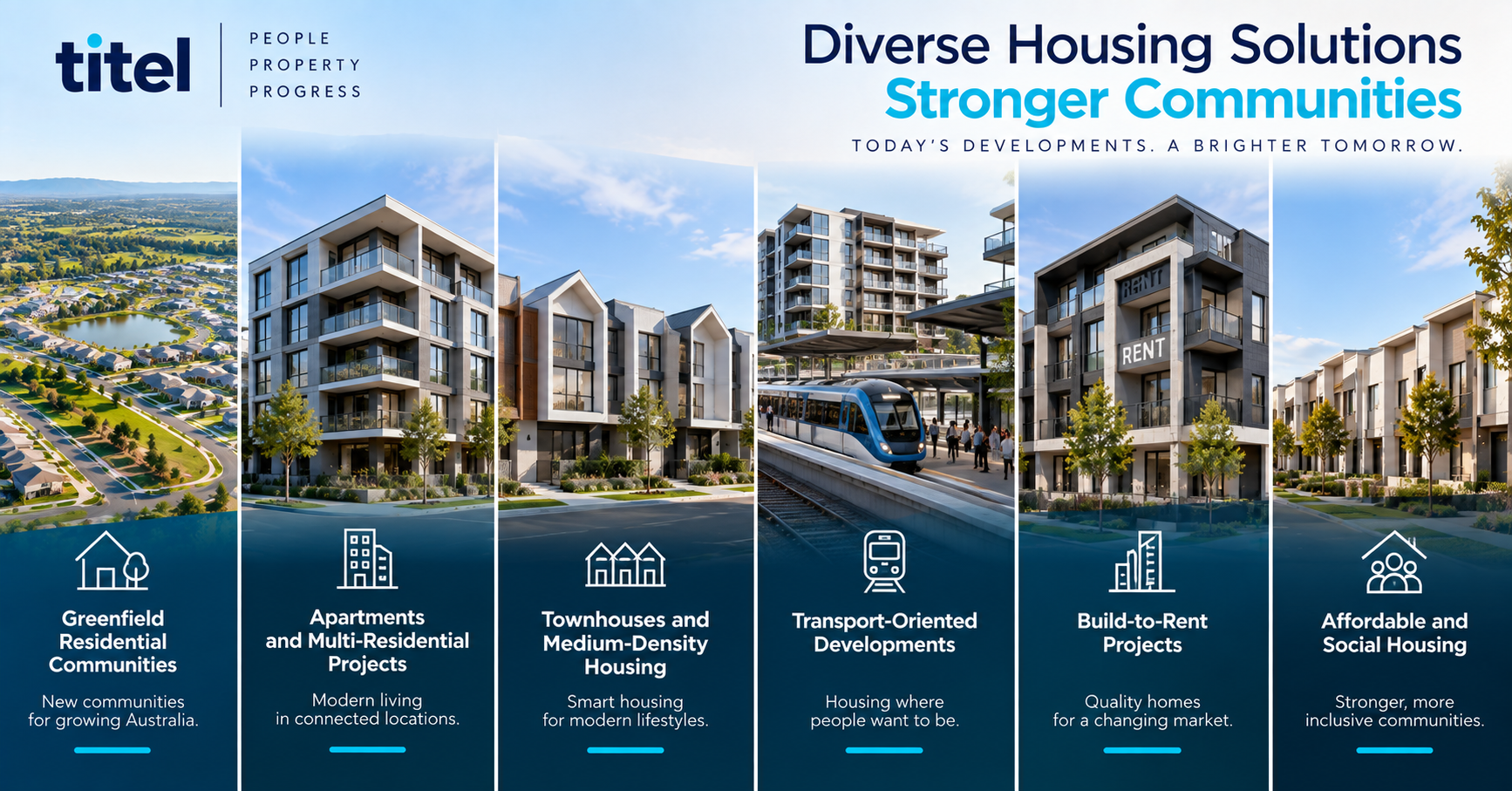
We are likely to see a combination of:
- Greenfield residential communities.
- Apartments and multi-residential projects.
- Townhouses and medium-density housing.
- Transport-oriented developments.
- Build-to-rent projects.
- Affordable and social housing
In New South Wales, greater density around existing transport and established centres is becoming increasingly important.
Victoria is also encouraging more development around activity centres while continuing to rely on Melbourne's major growth corridors for new land and housing.
In Queensland, population growth and major infrastructure investment are creating substantial demand, while the availability of infrastructure-ready land remains critical.
Western Australia is experiencing its own strong housing and development cycle, supported by population growth and investment.
The Rise of Medium-Density Housing
One of the most significant changes may occur between traditional detached housing and high-rise apartments.
Townhouses, terraces, duplexes and low-to-mid-rise apartments can provide additional housing while allowing more people to live near employment, transport and existing services.
This could create significant opportunities for developers and builders capable of delivering more diverse housing products.
Housing Supply Is Only Part of the Challenge
Australia doesn't simply need projects approved.
It needs to turn those projects into homes.
That involves connecting:
Land → Developers → Builders → Agents → Finance → Buyers
Today, each participant often operates through different platforms, databases and processes.
As Australia attempts to increase housing production, improving the connection between these participants could become increasingly important.
Where Titel Fits
Titel is being developed as a connected real estate marketplace and transaction ecosystem.
Developers can present available land and projects. Builders can connect suitable home designs with land. Agents can access opportunities. Buyers can discover new developments, and participating financial institutions can become part of the property journey.
Instead of treating each stage independently, Titel's vision is to create a more connected pathway:
Discover → Connect → Finance → Transact → Own
Australia's next three years represent more than a construction challenge. They are an opportunity to modernise how housing is developed, distributed, financed and purchased.
Titel is building the digital connections designed to help bring land, property, industry, finance and buyers together.